Is Another World Possible? Brazil’s Example in Reducing Hunger
June 15, 2026
By Brenda Biddle
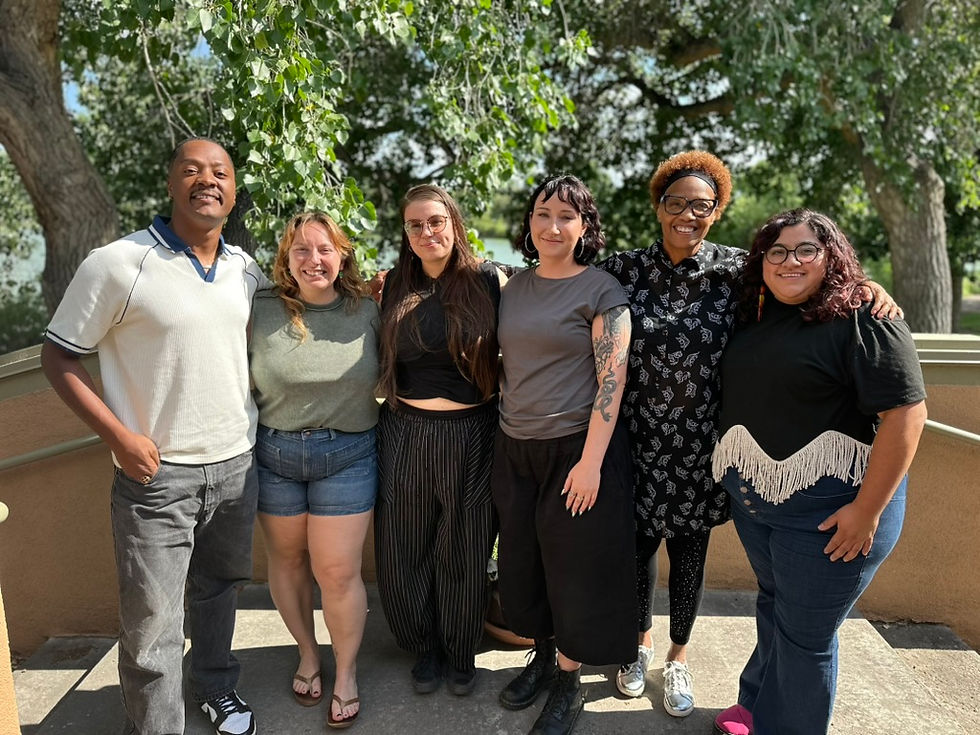
In the monthly membership meeting in April 2026, the National Right to Food Community of Practice welcomed colleagues, friends and movement leaders to discuss Brazil's historic achievement in swiftly diminishing hunger to unprecedented rates through "people-first" local food access policies and by granting every Brazilian the human right to adequate food in national law. More than 100 people participated in the meeting to explore the processes, policies, and actions from Brazil’s experience that might align with our members’ work in advancing the right to food in cities, towns, and states across the U.S.
Presenters included: M. Jahi Johhson-Chappell, Elisabetta Recine and Molly Anderson.
Hunger remains one of the world’s most persistent and intractable problems. For decades, the dominant response has been to produce more food. Yet the world already grows enough food to feed everyone, while millions still lack reliable access to adequate food or the financial means to purchase it. Hunger persists not because food is absent, but because access is shaped by inequity, exclusion, and failed public policy.
Brazilian physician, geographer, and anti-hunger thinker Josué de Castro recognized this decades ago. Drawing on his research in Recife, northeastern Brazil, he argued that hunger and malnutrition are most often caused by social and political failure rather than by natural scarcity.
People living in poverty and precarity need equitable access to adequate, nutritious, and culturally appropriate food to realize the right to food. Too often, they lack the resources - income, land, or social protections - needed to secure it. In many parts of the world, urban hunger has deepened as former subsistence farmers have lost access to land and moved to cities in search of unstable or unavailable work. At the same time, the erosion of rural development programs has left many people in the countryside without viable support. These patterns reveal the limits of neoliberal, productivist approaches that expand output without guaranteeing justice or access.
This post examines Brazil’s recent anti-hunger strategy, Brasil Sem Fome (BSF, Brazil Without Hunger), which has rapidly reduced food insecurity in a country long marked by deep inequality. What made this progress possible, and what lessons might it offer to right-to-food advocates elsewhere?
How Brazil Reduced Hunger: Background and Origins
Brazil's recent progress against hunger did not emerge overnight. It grew out of decades of local experimentation, national coordination, and sustained collaboration between government and civil society.
The roots of Brasil Sem Fome can be traced to Belo Horizonte (BH), the sixth-largest city in Brazil and the first planned modern city. The city government created the Municipal Secretariat of Food and Nutritional Security in 1993. The city's Zero Hunger initiative (BSF) launched on a small scale in 2002 and expanded over time into a broader strategy linking food production, distribution, and social protection. Rather than treating hunger as a single-issue problem, the program considered the needs of both consumers and producers and adopted a more holistic approach to food security. The many programs spearheaded by the Secretariat supported improvements in health and nutrition, resulting in profound outcomes, including a 60% decrease in child hospitalizations due to malnutrition and a similar reduction in child mortality among children under five.
A crucial player in the program was Patrus Ananias, elected Mayor of Belo Horizonte in 1992. M. Jahi Johnson-Chappell, Director of the Center for Regional Food Systems at Michigan State University and guest speaker at our April meeting, outlines the former mayor’s contributions in his book Beginning to End Hunger: Food and the Environment in Belo Horizonte, Brazil, and Beyond: “His term as mayor was marked by structural reforms in city administration, changes in city hall organization, in public planning, and in public policy. He pursued a social development agenda, with policies to address poverty, food security, job creation, and income promotion, as well as investments in education and health. He also implemented a participatory budget. His public administration was recognized as a model through an award from the United Nations.”
Ananias later became Minister of Social Development and the Fight Against Hunger, and under then-President Dilma Rousseff, he served as Minister of Agrarian Development.
By 2005, organizers had begun building a database of families identified through social service programs. The database made it easier to reach households in need and strengthened the program's capacity to respond comprehensively rather than through fragmented assistance. The BH program served as a test bed and model for the national BSF program launched by Inácio Lula da Silva (Lula) during his first term as President.
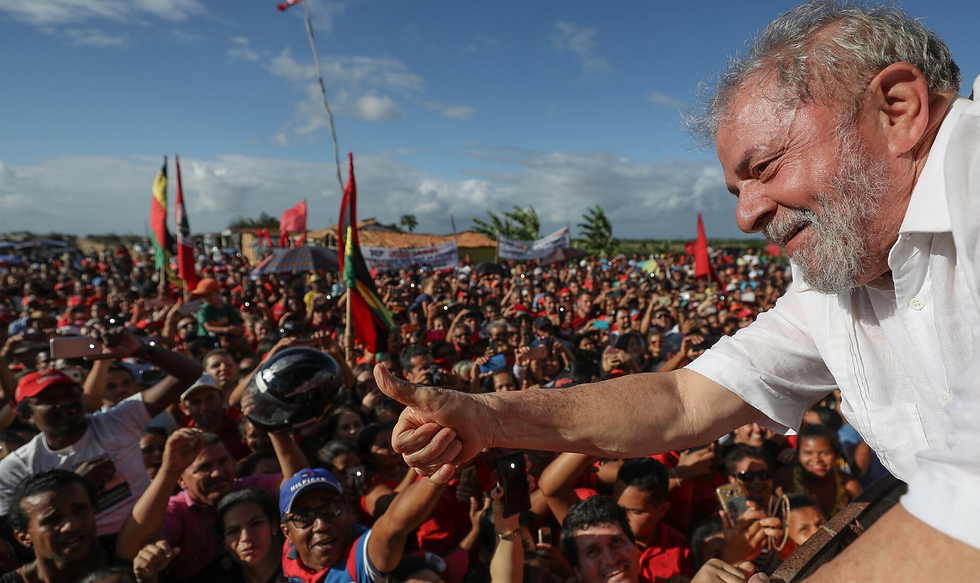
On a national scale, the election of Inácio Lula da Silva as president of Brazil, from 2003 to 2011, and the creation of new fiscal policies for social welfare programs, such as Bolsa Família, greatly supported a move away from poverty for millions of Brazilians and hence served as an ideal platform to address a variety of social ills, including hunger. Lula’s background prepared him well to understand the needs of poor Brazilians. As a child, his education ended after the second grade. He did not learn to read until the age of ten. Later, as a metalworker, trade unionist, and founding member of the Partido dos Trabalhadores (PT), also known as the Labor Party, he was an essential part of Brazil's re-democratization during these years. He was also considered one of Brazil's most popular presidents with an approval rating of 80% when he left office.
After an extreme rightward turn under Jair Bolsonaro's presidency, Lula was elected president again in 2023.
Setbacks and Renewal
After its early successes, the program suffered severe setbacks under Jair Bolsonaro's government, which effectively dismantled much of the anti-hunger framework between 2019 and 2022.
From 2023 to the present, the national effort has been revived, with strong backing from civil society, especially from Brazil's Landless Workers' Movement, the Movimento dos Trabalhadores Rurais Sem Terra (MST). That renewed partnership, as well as strong support from the Partido dos Trabalhadores, helped restore momentum quickly and reestablish hunger reduction as a national priority.
Brazil's anti-hunger advances were part of a broader wave of social and political change across Latin America in the early twenty-first century. During this period, national movements, grassroots organizers, public intellectuals, and left-leaning governments often influenced one another, creating a climate of experimentation around alternatives to neoliberal policy.

How the Brasil Sem Fome Program Works
The program now coordinates action across multiple sectors. One example is the purchase of food from family farmers for distribution to hospitals, schools, and public restaurants. This design supports local producers while improving access to affordable meals for vulnerable communities.
Johnson-Chappell, who moderated the Community of Practice discussion in April, emphasized that one reason for Brazil's success was the willingness of groups that often work separately to collaborate around the right to food. This cooperation helped connect grassroots knowledge, public administration, and policy design in a way that made reform more durable.
Johnson-Chappell also stressed that the Brasil Sem Fome efforts drew on John Kingdom's multiple streams approach, pictured below.

Addressing hunger in Brazil has been an important goal for many years and has required a sustained, concerted effort from many people in various sectors. At the same time, it has not been a linear process; setbacks have occurred, especially under political reorientation such as the presidency of Bolsonaro.
CONSEA: the National Council for Food and Nutritional Security
Elisabetta Recine, President of the Brazilian National Food and Nutrition Security Council (CONSEA) also spoke at the April meeting. She highlighted the crucial role of CONSEA as a formal institutional space in which civil society can connect with all three levels of government—national, state, and municipal. This ongoing collaboration has helped produce a comprehensive national anti-hunger strategy grounded in dialogue with social movements and activists drawn from many sectors of society, including indigenous groups, landless workers, peasants, African descendants, urban dwellers, and human rights defenders. Assemblies composed of two-thirds civil society representatives and one-third government officials meet regularly to assess current needs. Every four years, CONSEA helps co-create new policy proposals that are then adopted nationally and implemented at the state and municipal levels.
Recine emphasized that the program's long-term success rests on an approach that links hunger reduction with support for sustainable agriculture and family farming. In the United States, these issues are often treated separately; in Brazil, they have been addressed as part of the same food system.
Getting Food to the People: Popular Restaurants, School Meals, and Other Points of Distribution
Brazil now has many ‘Popular Restaurants’ (also known as ‘Community Restaurants’ or ‘People’s Restaurants’), community centers, and care centers for youth and elders that serve low-cost food. By supporting local farmers in growing for local markets, the costs of a long and complex supply chain are reduced. Both growers and consumers benefit. In the Popular Restaurants, recipients of Bolsa Família (Family Basket), a national assistance program for low-income families, receive 50% off all meals. The average cost of a dinner is about one dollar. A registered homeless person can access a meal at no cost. Breakfast, lunch, and dinner are provided.
Education around nutrition and diet has also been widely instituted in schools and other social venues.

Other Policy Tools
One of the economic factors that has had a profound impact on efforts to address hunger and malnutrition in Brazil is that its government, unlike the U.S. government, has regularly increased the minimum wage.
Moreover, as part of its comprehensive Sem Fome policy, the national government has taken some responsibility for the maintenance and equilibrium of national food stocks, as well as playing a role in moderating markets, both key tools that governments can use to address hunger, which will be crucial for nations that want to develop greater food sovereignty and ensure the right to food for their population.
Another benefit of the Sem Fome program is that civil society members can request specific adjustments or solutions for specific locations or problems. For instance, after being requisitioned, the local government in an arid region provided access to water cisterns to promote food production.
Civil Society Support
Over the years, Brazil's Landless Workers' Movement (MST) has provided crucial support to the Zero Hunger program.
Four decades ago, Brazil addressed the need for land reform in a dramatic way that has been replicated in other countries, such as in Venezuela under Hugo Chavez. On a large scale and with the aim of improving various quality-of-life factors, MST requested that the national government allow land resettlement on swaths of land that were lying fallow. MST argued that Brazil's 1988 Constitution justifies the occupation of unproductive rural agricultural estates. Specific articles within the constitution support the legal principle that all land must fulfill a "social function," allowing the federal government to expropriate idle land and redistribute it to impoverished rural families. Specifically, the government acknowledged the need for some urban dwellers and other landless workers to return to the land and receive support for housing and productive tools, while having access to work through sustainable production. Within the settlements, people were able to create schools, radio stations, and other necessary infrastructure.
Now, four decades later, MST provides significant support and validation of the Zero Hunger program. An example of this can be found in its widespread education programs and radio stations. In recent years, even the sale of hats and T-shirts has helped to promote the ideals of sustainable agriculture, land access, and anti-hunger programs, bringing these projects into the mainstream. The success of organic production in some resettlements has won over many in the urban middle class seeking clean, sustainable, affordable, and nutritious food. The food embodies the ideals of the Zero Hunger Program, helping to spread the vision.

Elisabetta Recine concluded in her presentation to members of the National Right to Food Community of Practice: "Brazil didn't beat hunger by chance – this took concerted political action. We did it by putting people, family farmers, Indigenous and traditional communities, and access to good local food at the center – and by including those most affected."
In her view, some of the main components of Brazil's approach to addressing hunger were as follows:
It merged anti-hunger programs with programs to support sustainable agriculture. It created a ministry of agricultural development to address long-term needs for food production for Brazil's population.
And importantly, it adopted unconditional cash transfers to enable people in poverty to purchase food and low-cost meals.
Brazil repurposed the idea of cash transfers, which was instituted in Mexico in the 1990s. In Mexico, the purpose of the cash transfers was to help more children attend school, and enrollment grew significantly. In Brazil, the purpose of the cash transfers is to help families put food on the table.

Brazil's progress in reducing hunger shows that lasting change depends on more than food production alone. The success of Brasil Sem Fome has come from combining cash assistance, support for family farming, affordable public meals, and strong institutions that connect civil society with government at every level. Just as important, the program has endured because social movements, public officials, and community organizations continued to treat hunger as a political and structural problem that required coordinated action. Together, these elements offer a powerful example of how a rights-based, people-centered food policy can quickly reduce hunger at scale.
Additional Reading and Learning: