2025 Right to Food Learning and Action Fellow Spotlight: Peyton Varma Yourch
March 5, 2026
By Daniel Chian, National Right to Food Community of Practice Summer Intern, Oberlin College

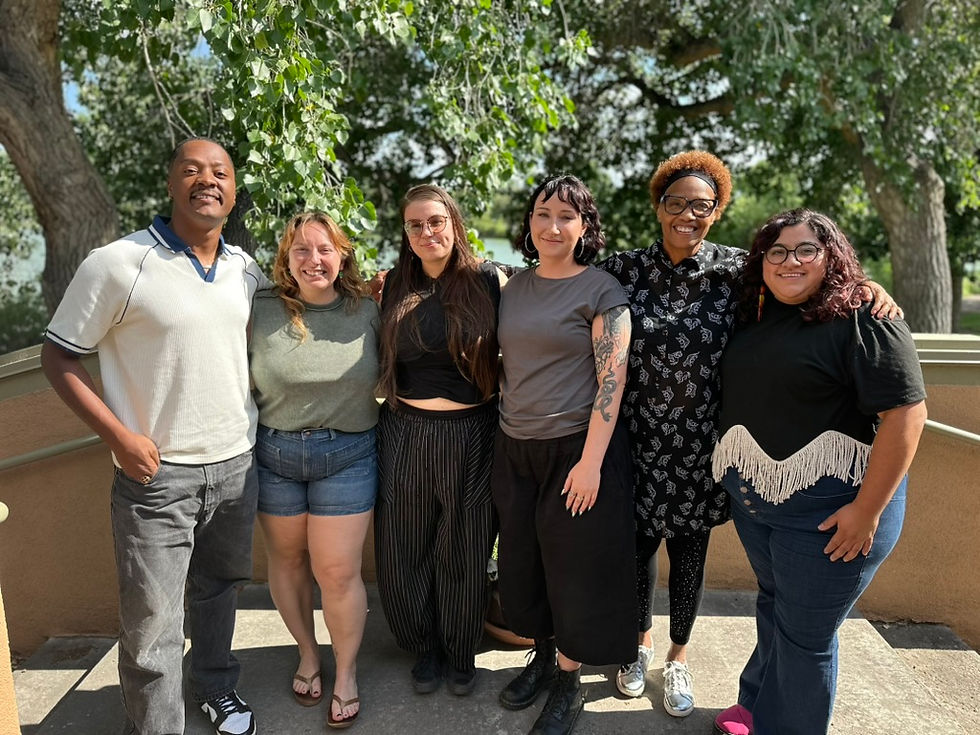
For our fifth and final entry in the Right to Food Learning and Action Fellows Spotlight Series, we would like to introduce Peyton Varma Yourch. Peyton works on several projects with a focus on community organizing within local chapters of the National Union of the Homeless, Nonviolent Medicaid Army, and the Poor People’s Campaign. Additionally she is an active member of the Schenectady County Food Council and works to connect and build community with organizations across New York. Peyton previously served as the Alliance Manager at The Alliance for a Hunger Free New York, where she worked to empower community leaders at local food pantries to lead systems change.
Peyton is a New Yorker through and through, born in Long Island and raised in Saratoga. She pursued a degree in Peace and Justice and Political Science at Pace University in New York City. After graduation, Peyton returned to Schenectady, where she has been based since 2021. Food has played a major role in Peyton’s life and work, including her first job at a diner at the age of 13. She continued to work in restaurants and eventually kitchens. Meanwhile, her passion for food developed. “I loved food, to cook, to be around the fast paced environment but also the community and support I had built in my restaurants. Doing that work is rough so you build a bond with those around you. My chefs/restaurant family looked out for me in my toughest times and they pushed me to be better.” Through the long hours and poor benefits, Peyton and her coworkers formed a strong bond. It was this support system that allowed Peyton to begin working as a private chef, and later encouraged her to go to college.
Even before she started working, she learned to cook with her father. A cook himself, Peyton’s father was a major part of cultivating her interest in food early on, teaching her about its ability to create community. When Peyton met their now husband, Sidharth, one of the first things they connected about was food. On Peyton's first holiday with Sid’s family, they were worried she wouldn’t like any of the food from the Kerala sadya. The diversity of food in India is vast and the food specific to Kerala emphasizes coconut and other unique flavor profiles. Not only did Peyton love the food, she insisted on a fusion menu for their wedding to encourage her family to try more Indian food, with dishes like palek burrata and tikka masala meatballs. Now, Peyton and Sid’s favorite way to spend time with their Amma and Achan (mom and dad in Malayalam) is over a shared meal or trying a new restaurant.
While at the Alliance for a Hunger Free New York, Peyton worked with siloed frontline emergency food providers to build a statewide network that would radically address hunger. She stresses the importance of last mile distribution, the delivery from retail to consumer, which is simultaneously the most expensive and most sparse part of many distribution networks. Peyton has learned that as the closest point of contact with their communities, food pantries are the most acutely aware of what specific changes could be made to their distribution strategies. By investing in and learning from those “microprocessors,” she argues, we can produce more diverse, resilient supply chains, more ethical routes for food distribution, and more ways to implement good food purchasing. Her work, then, revolves around amplifying the voices of those on the frontlines in discussions around food systems change.
Peyton first heard of the National Right to Food Community of Practice and the right to food framework through an article by Director Alison Cohen. She found it refreshing to hear people speak openly about the issues with food banks, as their experience with previous spaces for imagining systems change discussion often didn’t go beyond small circular discussion. Describing her own complicated relationship with emergency food distribution, Peyton said: “The emergency food providers I’ve worked with are actively trying to put themselves out of business but the food banking system is a reflection of the for-profit food industry, leaving the same people behind. It shifts the burden to generous neighbors and sustains the perpetual existence of charity - preventing the great people that sustain the system from ever ending hunger.”
Peyton remains motivated by other people’s drive to continue their work, as well as the history that her work is built upon. While discussing the many people whose shoulders she stands on, she mentioned the Black Panther free breakfast program as a prime example of food work as an organizing tactic. In July, Peyton also resumed her work with cooking, stepping in as an interim chef at her local free breakfast program.
Please join us in celebrating Peyton Varma Yourch, one of our inaugural 2025 Right to Food Learning and Action Fellows!

Follow Peyton's organizing efforts on Instagram: @protestkitchen
To learn more about the rest of our impressive Fellows, click here!