How SNAP Supports the Right to Food
December 16, 2025
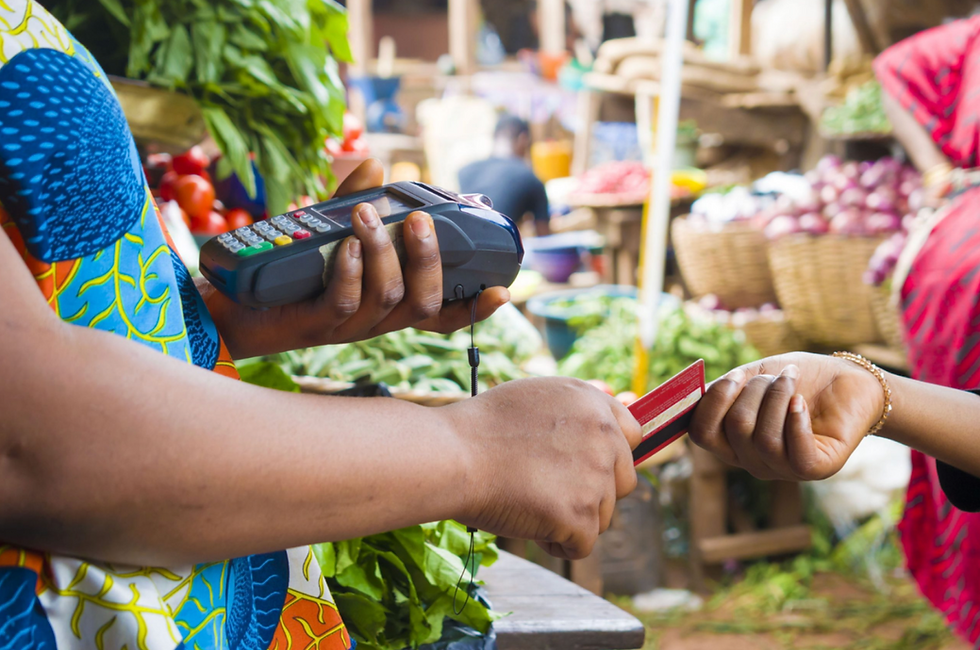
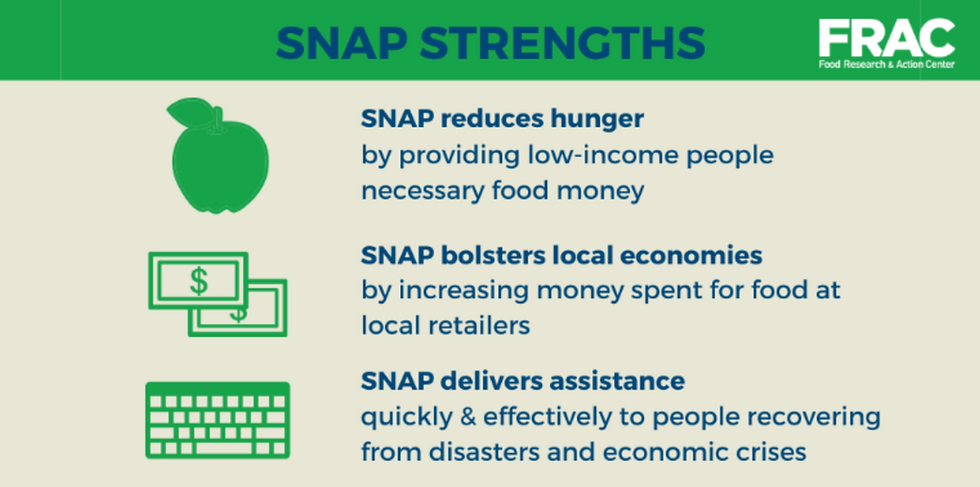
The Supplemental Nutrition Assistance Program (SNAP, formerly known as ‘food stamps’) supports an average of 41.7 million people per month to access nutritious food in communities across the United States. It is the most effective anti-hunger program our country has, and the investment made in supporting families and individuals to afford food with dignity and choice is an economic multiplier that ripples through local economies to support farmers, grocers, and retailers throughout each state.
Yet, this vital public program is under threat.
A right to food framework locates our shared concerns about what is happening with nutrition assistance programs within an internationally recognized set of norms, aspirations, and obligations. These norms strengthen our local advocacy in towns, cities, and states by providing a collective way to focus on government accountability and the role our government plays in creating and sustaining the conditions needed for all of us to access nourishing food with dignity.
What follows is an analysis of SNAP through the lens of a right to food framework. We outline how as a federal policy, SNAP helps to address poverty and food insecurity by putting money in the pockets of low-income families and individuals, supporting them to purchase nourishing foods with dignity. A fully funded SNAP program, devoid of punitive restrictions and accessible to all who are eligible, is a strong example of rights-based strategy to mitigate food insecurity for millions. The recent threats to SNAP during the Government shutdown and the impending changes as a result of H.R.1, undermine and weaken this critical strategy for progressively realizing the right to food in the United States.
SNAP is a legal entitlement, not a privilege
SNAP is a legal entitlement in this country. This means that anyone who is eligible to receive support cannot be denied SNAP benefits without due process. This is important because it means SNAP is more than a privilege that can be granted or taken away from individuals arbitrarily - people who are eligible for SNAP have a right to a notice of reduction or termination of benefits and a fair hearing to contest those changes if requested.
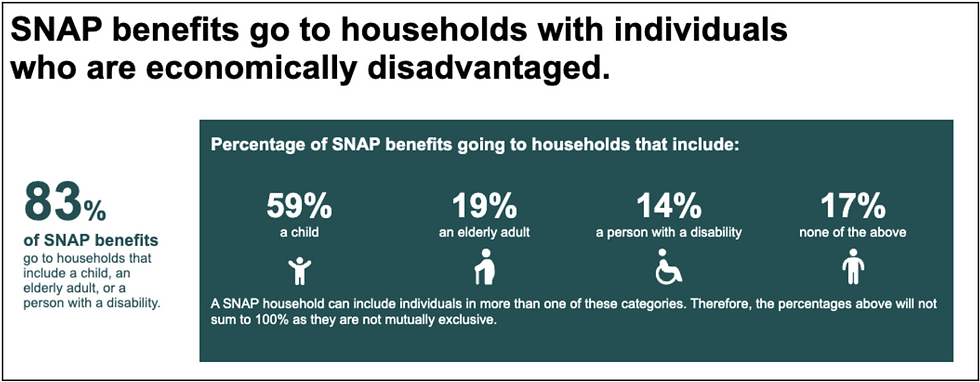
SNAP makes nutritious food more affordable for millions of people
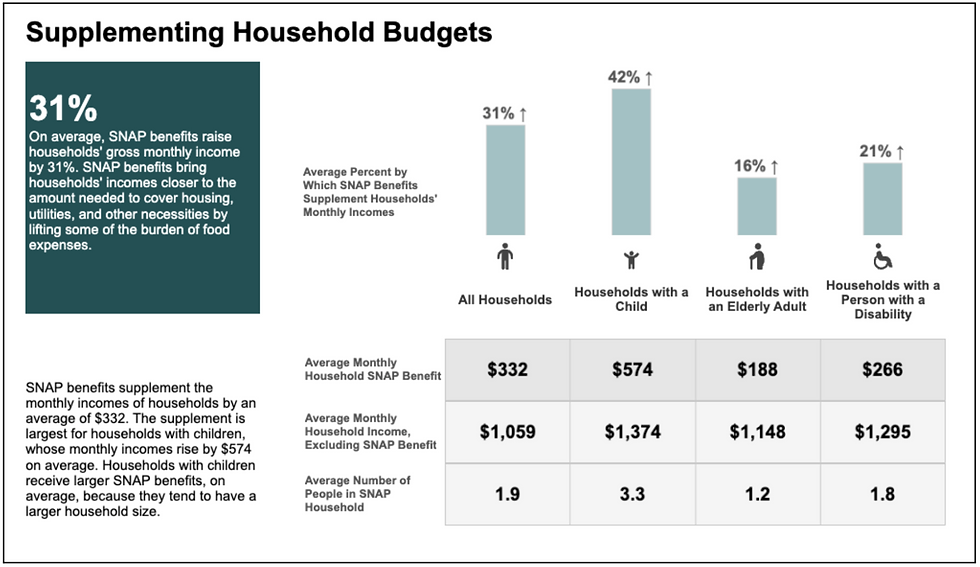
SNAP supports the economic accessibility dimension of the right to food by supplementing monthly food budgets for low-income households. It is estimated that the average a single person household would receive in fiscal year 2026 is $204 per month ($6.70 per day), and a family of four would receive an average of $715 per month (less than $6 per person per day).
Food assistance is administered through Electronic Benefits Transfer (EBT), and people receiving support use a card similar to a debit card to access their benefits. New funds are loaded onto the EBT card monthly, which allows the person to make purchases at authorized retailers or farmers markets. People who receive SNAP benefits are able to use that money to purchase groceries, which means they have more money to spend on non-food items as well. This supports agency and dignity by helping millions of people make choices rather than needing to rely on what is available through food pantries.
The health benefits of SNAP are clear and reflect the relationship between food insecurity and poorer health outcomes. Increasing household budgets through SNAP supports the adequacy dimension of the right to food by helping people to afford nutritious foods - fruits, vegetables, meat, poultry, fish, dairy, breads, and cereals. Removing or reducing these benefits makes it far more challenging for many low-income individuals and families to purchase enough food to meet their nutritional - and sometimes even caloric - needs. Low-income households will have to resort to buying cheaper and less nutritious food. Research demonstrates that older low-income SNAP recipients were less likely to be hospitalized or visit an emergency department, both of which can carry considerable costs and exacerbate barriers to affording nutritious foods.
SNAP enhances the geographic accessibility of food
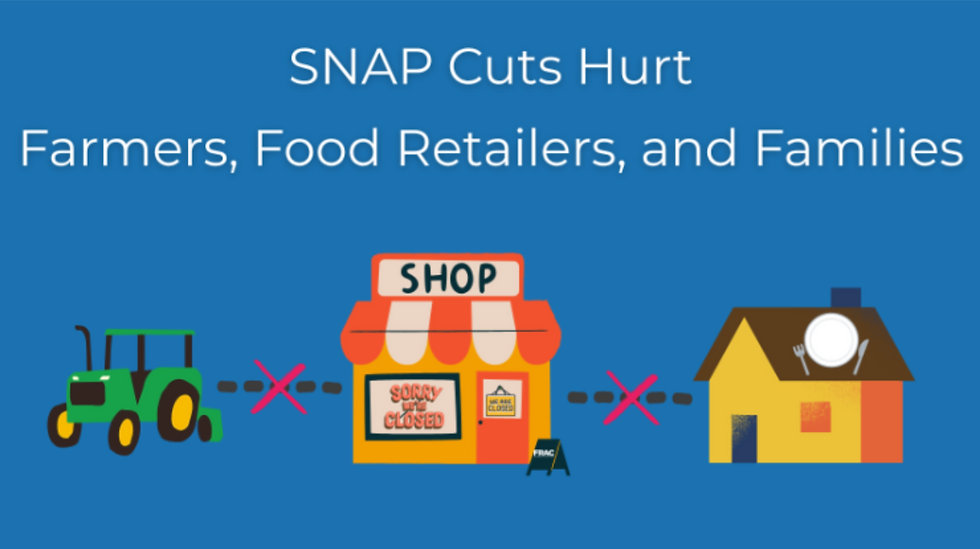
Grocery stores - especially independent ones in rural areas - rely on SNAP funding to keep their doors open. While larger retailers may receive more SNAP money overall, SNAP makes up a larger proportion of sales for smaller grocers in some areas - SNAP accounts for about 12% of grocery sales per year, but can be up to 60% for grocers in some low-income urban or rural areas. Customers use their benefits to buy groceries, so when fewer people participate in SNAP each month, this means less revenue for grocery stores. This can lead to a reduction in staff hours or employees, or to grocers having to close down. Reducing hours or cutting staff has an effect on the economic accessibility of food for those workers who have lost wages, and a further impact on everyone when food prices increase to reflect the loss of earnings.
The closure of small, local grocers is likely to limit the geographic accessibility of nutritious food for people living in rural communities, where food outlets providing fresh foods - like meat, dairy, fruits, and vegetables - are less common.
Financial pressure on local and independent grocers also means that the food retail market is more easily captured by corporate chains and large grocery stores. The low wages typically paid by the large grocery chains further contribute to both the need for SNAP and the erosion of the economic accessibility of food. In 2020, for example, Walmart was identified as one of the top four employers of SNAP and Medicaid beneficiaries in all 11 states included in the study.
Farmers and farmers markets that accept EBT also benefit from SNAP dollars spent by their customers. Restrictions and cuts to SNAP will mean a loss of revenue, which harms small farmers producing local, sustainable food as well as the surrounding communities. With margins already tight, the loss of customers and spending will affect the economic accessibility of food for farmers and their families. If small farmers cannot afford to continue operating or selling at farmers markets, it will affect the availability component of the right to food for those communities.
Next steps
This post is part of a series about how SNAP helps to realize the right to food and why we are supporting coordinated and sustained strategies at local and state levels for protecting this essential program from efforts to reduce access. We encourage you to read our previous post and look out for more information from our members and partners about how advocates are using a right to food framework to defend and protect SNAP at local and state levels.