Protecting the Right to Food at State Level: Rhode Island's Model of the 'Fair Price Grocery Agenda'
Updated: Aug 25
July 6, 2026
By Nessa Richman and David Folcarelli
Ensuring a true right to food for all people—the universal human right to feed oneself in dignity—is an enormous undertaking. It requires willing governments to build systems where everyone has reliable, continuous access to adequate, nutritious, and culturally acceptable food. In the United States, despite the national empowerment of a united, pro-hunger front made up of political and corporate powers, a new path towards establishing the right to food has begun to emerge: fighting this battle state by state.
Because the U.S. federal government does not recognize this as a legally-enforceable right—and frequently votes against UN resolutions establishing it internationally—a right to food movement within / across the United States right to food movement can at times feel difficult to imagine. This feeling grows with each new day, as the sitting federal administration makes it their mission to gut food accessibility at every level, from failing to protect producers to working to remove both customers and retailers alike from the nation’s food assistance programs.
And yet, in spite of the opposition to recognizing the human right to food in the highest halls of our government, there have been genuine, meaningful successes in the last year because individual states are taking action. Maine voters amendment their state constitution to establish a "right to food" at state level, and the legislature continues to strengthen these protections through further action. California and other states have also passed legislation declaring access to food a fundamental human right.
But enforcing a right to food does not necessarily have to take the shape of passing explicit “right to food” declarations or resolutions. Work can be done to strengthen protections for a right to food without ever using that specific terminology. As long as legislation, in fact, creates an environment for people to have continuous access to adequate, nutritious, and culturally acceptable food, it is a critical part of ensuring this right.

Find out more about the Fair Price Grocery Agenda here.
The Rhode Island Model
In Rhode Island, Lieutenant Governor Sabina Matos is leading the charge to pass a package of legislation her office calls the “Fair Price Grocery Agenda”. The Agenda is a package of consumer protection and antitrust bills aimed at reducing food costs and increasing supermarket competition. It targets anti-competitive practices by large corporate chains and suppliers through four core legislative pillars:
Banning Restrictive Covenants (H 8106/S2644), which prohibits large supermarket chains (like Ahold Delhaize or Walmart) from using deed restrictions that prevent vacated or new properties from being used as grocery stores – sometimes for up to 30 years;
Equitable Pricing & Supplier Fairness (H 7514/S2642), which is modeled after the federal Robinson-Patman Act and prevents suppliers from giving large, national superstores preferential pricing discounts while overcharging small and medium-sized independent grocers; and
Fair Digital Coupons (H 7719/S2643), which requires stores to provide in-store or non-digital alternatives for coupons to protect consumers who don’t own smartphones, like seniors.
Clear, Dependable Pricing (2025 - H5551/S629), which seeks to prevent dynamic or “surge” pricing in response to real-time demand by ensuring physical price tags remain in place at the grocery store.
The Lieutenant Governor is not alone in this fight. The Rhode Island Food Policy Council (RIFPC), an independent nonprofit coalition that brings together stakeholders from agriculture, fisheries, public health, food justice, and communities across the state to build a just and resilient local food system, is right alongside them. RIFPC supports the “Fair Price Grocery Agenda” as an advocacy engine, a coalition builder, and a legislative advisor.
In September 2025, RIFPC invited the Lieutenant Governor to keynote its annual Policy Retreat, where she spoke to over 100 Council members who then collaborated to select top policy priorities and develop strategies to get them passed into law. As the individual pieces of legislation came up for hearings and made it to the House and Senate floor for votes, Council members were kept informed and supported in reaching out to their own state Representatives and Senators to urge their passage.
Rhode Island Lieutenant Governor Sabina Matos at bill signing ceremony in 2026.
Successful Experiments in the Laboratories of Democracy
It’s not just happening in Rhode Island. While Lieutenant Governor Matos was the first to introduce some of these concepts as state-level legislation, her work draws on a long history of municipal leadership from around the nation. New York, Maine, Minnesota, and more have brought forward their own Robinson-Patman inspired legislation. Supermarket deed restrictions were first prohibited by Chicago in 2007. That idea spread to Washington, D.C. in 2018, which helped the city to open 20 new grocery stores over the following five years.
The Lieutenant Governor introduced her legislation to prohibit this practice statewide in 2025, and within a year Washington, Arizona, and California had all proposed laws on their own. State advocacy has a multiplier effect — as each state determines their own best practices, their peers and neighbors begin to adopt the same policies. Our states are seizing, in the words of U.S. Supreme Court Justice and antitrust pioneer Louis Brandeis, their right to serve as laboratories of democracy.
This movement to address the ill effects of corporate consolidation on grocery access and affordability is building traction with early successes. Washington state and Rhode Island both successfully passed bans on anti-competitive, anti-food covenants, and California’s bill has moved through the State Assembly at the time of this writing. This success has not gone unnoticed. In May of 2026, a group of U.S. Senators from four states wrote a letter to the Federal Trade Commission. Citing the effects of restrictive covenants on communities like Woonsocket, RI, and Bellingham, WA, the Senators asked the Commission to begin exploring its ability to regulate this practice nationally. In addition to protecting their own residents, the states that have taken action on these practices are spurring action at the federal level.

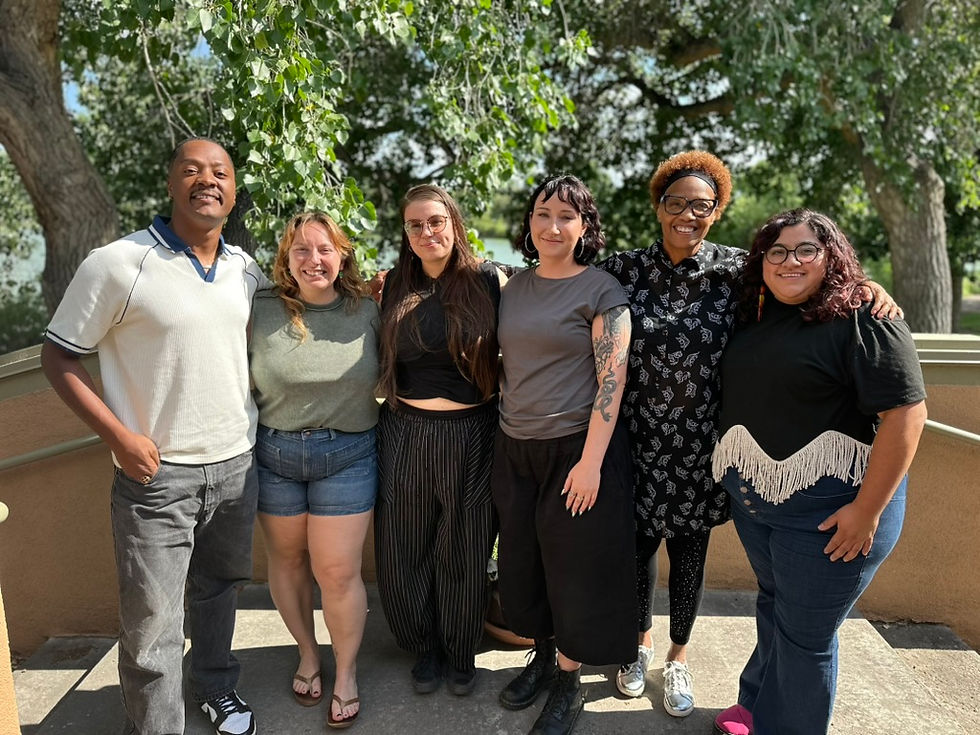
Photo credit: Rhode Island Food Policy Council.
A 50-State Path to the Right to Food
State governments possess an immense reserve of statutory, regulatory, and financial authority. They can deploy these resources creatively to dramatically improve their residents' quality of life. This expansive state constitutional power allows state leaders to act as engines of innovation when it comes to the right to food. States can bypass federal gridlock – and even federal enmity – to implement targeted, impactful policies that ensure their residents have continuous access to adequate, nutritious, and culturally acceptable food.
By actively leveraging this capacity, U.S. states can systematically dismantle barriers to progress. This type of proactive, subnational governance – supported by multisectoral governance efforts like Food Policy Councils – directly helps people realize the full vision of the right to food. It transforms abstract human rights into tangible, daily realities for every community across the country.
Guaranteeing a right to food in the U.S. is difficult because the federal government treats food as a commodity rather than a fundamental human right. The U.S. Constitution does not recognize this right, and policymakers rely on decentralized charity and safety-net programs to manage systemic poverty and wage stagnation rather than focusing action on building a society where everyone can afford the food they need. Exacerbating factors include systemic poverty and inequality and fraying federal safety nets. While right to food framing sometimes centers purely on federal government accountability, states can act now to leverage their considerable power to build the policy framework where the right to food can actually be realized.
Nessa Richman is Executive Director of the Rhode Island Food Policy Council and author of Food Policy Councils: Building Civic Engagement and Community Well-Being (2026).
David Folcarelli is Senior Advisor to Rhode Island Lieutenant Governor Sabina Matos. Listen here for a conversation with Lt. Governor Matos and David Folcarelli about the ‘Fair Price Grocery Agenda’ on Resilient Rhode Island on WBLQ Radio.
Nessa and David spoke alongside members of the California Food and Farming Network at our monthly National Right to Food Community of Practice meeting on July 14th: Food as a Right, Not a Privilege: Leveraging State Action Against Corporate Retail. Please contact us for a recording of the discussion.