Safe access to food is a fundamental right: ICE tactics erode our basic freedoms
Updated: Feb 9
February 6, 2026

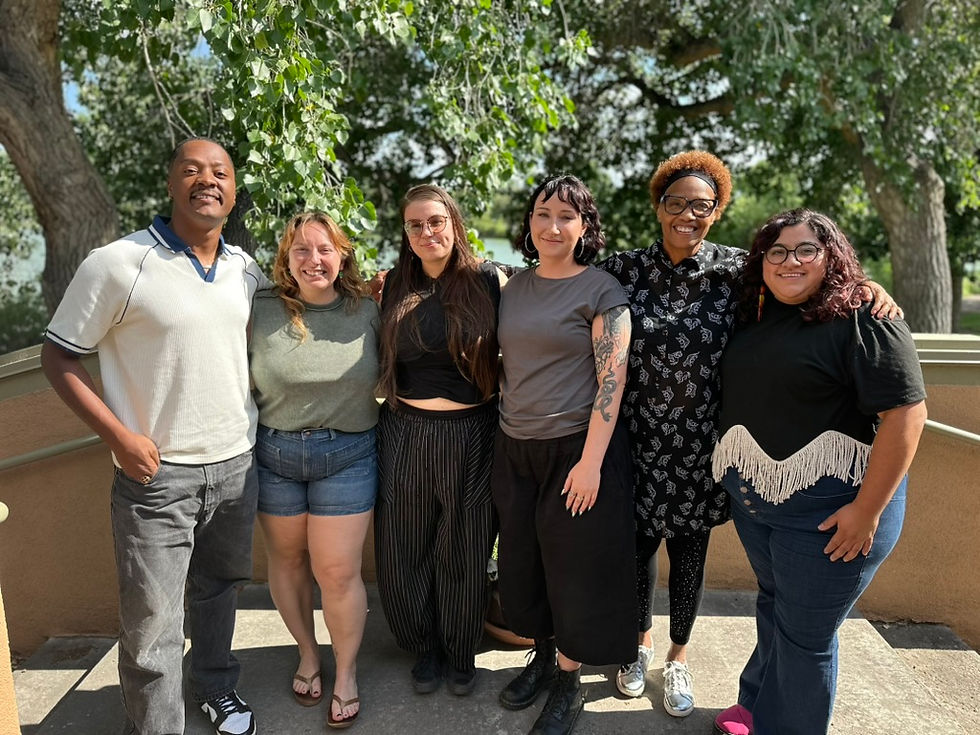
Photo credit: Gayatri Malhotra
The right to food is about creating and sustaining the conditions needed for everyone to access the food that meets their social, cultural, and nutritional needs, both now and in the future. We cannot create these conditions while people are afraid to leave their homes. We cannot build a rights-based society while people live in fear of being detained, imprisoned, or killed as they go about their lives.
Over the past weeks, ‘surge operations’ by Immigration and Customs Enforcement (ICE) and Customs and Border Protection (CBP) agents have caused thousands of families in Minnesota and Maine to face wrenching decisions about whether it is safe to go to work, go to the grocery store, or send their children to school. Many thousands more have responded by standing in solidarity with their community members and standing up for basic freedoms.
Rights to life, liberty, a fair trial, privacy, and free speech are foundational rights of a democracy, and they are fundamental to the realization of the right to food. These basic freedoms mean that the government cannot enter our homes without a judicial warrant, cannot detain us without due process, cannot keep us detained without a fair trial or in undignified conditions, and cannot kill us arbitrarily. These freedoms underpin our efforts to advance the right to food for all communities because without them, people cannot access food that nourishes them with dignity.

Photo credit: Southern Poverty Law Center
We encourage you to consider the ways you or your organization contribute to shaping laws, policies, and narratives that promote the dignity of every human being. As rights holders, we all have a role to play in creating and sustaining the conditions needed to realize the right to food for everyone in our communities.
There are plenty of places to get involved. Here are some of the ways ICE’s tactics are standing in the way of the right to food, and some suggestions for what you can do:
Without safe access to school, children miss important meals.
Minnesota and Maine are two of the nine states that have passed School Meals For All policies, guaranteeing breakfast and lunch to every child in attendance. Yet thousands of children have missed these meals over the past few weeks because of the fear that they or their parents would be harassed or abducted on their way to school. Escalated ICE presence in Minnesota has significantly affected attendance rates and the daily life of students, parents, and school staff. After the first week of the ‘surge operation’ in Maine, South Portland’s school district reported a 25% decrease in school attendance, and in Portland, figures show the disproportionate effect for multilingual students (41%), Hispanic or Latino students (39%), and Black students (34%) compared with white students (6%).
This fear is not new for immigrant families or specific to areas of the country where ‘surge’ operations are in place. Attendance rates were already affected when the Department of Homeland Security (DHS) reversed a policy on the first day of the new Administration that made it easier for immigration enforcement to be carried out at schools, daycares, hospitals, and public libraries. Thousands of children have been detained in ICE facilities since then, often for weeks at a time.
Whether you live in a state that guarantees school meals to every child or not, free meals at school help ensure that children can grow and thrive. Being able to safely access school is an important part of realizing the right to food for children.
Without safe access to work or grocery stores, people can’t purchase the food they need.
People have been taken from their work places and as they travel to and from their jobs - sometimes with smashed windows and cars left running on the street. The significant increase in arrest targets, and budget allocated to these operations, means that detentions have taken place at bus stops, in supermarket parking lots, on farms, in restaurants, and as people appeared for scheduled immigration court hearings. The 2,450 percent increase in the number of people with no criminal record held in ICE detention on any given day since January 2025 is a result of indiscriminate worksite raids, ‘roving patrols,’ and ‘collateral arrests’.
Sheltering at home for fear of detention or deportation means not being able to earn money to pay for food, rent, utilities, medicines, and other essential bills. One school district in Maine identified at least 120 families in their city who would need rent assistance in February to avoid eviction because parents had been too afraid to go to work since the surge of ICE officers in January. In Minnesota, city councils in Minneapolis and St. Paul both passed resolutions urging the governor to enact a state wide eviction moratorium. The Greater Twin Cities United Way reported that requests for rental assistance to their resource helpline have nearly tripled – and the Spanish-language line has seen a 1,646 percent increase in calls.
We know that when people are forced to choose between paying for food or the basic costs of living, meals are skipped and the quality or quantity of food people eat is affected. Not feeling safe in public places also means not being able to go to the grocery store to make choices about the food that you and your family need, even if you have money or other financial support. Choice and dignity are central to realizing the right to food, and immigration enforcement tactics are standing in the way.
*** *** ***
Teachers, social workers, parent groups, and mutual aid groups have organized support efforts to help children safely access schools and adults safely access work. Further efforts have been coordinated to deliver groceries to families who are hiding in place, and to raise funds to ensure people can cover their monthly rent and utility costs. Food Co-ops across the Twin Cities have stood in solidarity with immigrant communities by participating in the Minnesota economic blackout on January 23rd and by supporting organizations providing direct legal support to immigrants and their families through direct donations and by gathering additional donations through “Round Up” programs at the register.

Recent 'surge operations' are part of the pattern of ICE raids and use of the National Guard in cities and communities across the United States. Alongside emergency and immediate responses, we need to build sustained efforts and stronger protections, based on the dignity of all people, into our laws, policies, and practices.
In an apparent change of approach, it was announced at the end of January that “large-scale ICE operations” had ended in Maine, and agents operating in Minnesota were directed to avoid engaging with ‘agitators’. People in Maine remain cautious and uncertain about whether it is safe to go back to work or school, despite the reduced presence of armed and masked agents on the streets. Many families, coworkers, and neighbors continue to seek answers and justice for the 206 people who were detained during the 10 day ‘surge operation’ in multiple cities across the state.
In Minnesota, more than 2,000 ICE agents remain, and residents are not seeing a reduction in ICE sightings, or feeling any change in approach. Legal observers continue to be targeted, and the emotional and legal effects will be long-lasting.
Even a full withdrawal of agents would not mean an end to the suffering for people who have been managing ICE’s presence in these communities for weeks and months, or that people in other communities across the country are safe from similar tactics.
Immigration policy continues to leave far too many people at risk of detention in communities across the country. A legal case is underway about whether new DHS guidance allowing ICE agents to enter homes without a judicial warrant will be permitted. An unknown number of people are still detained and awaiting trial or release, often in states far from their homes and families. Thousands more people - in communities across the country - remain fearful about what is coming next.
Take action
Below, we have gathered some suggestions about how Community of Practice members and partners can use our shared voices, our shared focus on what is possible at local and state levels, and our shared commitment to the right to food to strengthen coordinated action across the country.

Photo credit: ABC News
Advocating for policy changes
Many states are currently in the process of taking legislative action to make it easier for people to feel safe in their communities - the State Innovation Exchange (SIX) has compiled opportunities for you to support local legislation where you live.
Below, we have focused on two policy areas that have a direct impact on safe access to food and nutrition support:
Reinstating limits on ICE and CBP actions in ‘sensitive locations’
In January 2025, the Department of Homeland Security revoked a longstanding policy that limits where Immigration and Customs Enforcement (ICE) and Customs and Border Protection (CBP) are permitted to operate. Many states are taking steps to reinstate limitations on immigration enforcement without a valid judicial warrant in public schools, health care facilities, child care facilities, and public libraries.
Here are some actions you can take in response:
State Innovation Exchange (SIX) has identified bills in Arizona, Colorado, Michigan, Rhode Island, and New York that would help to restrict ICE presence in these 'sensitive locations'. Maine residents can urge local Senators and Representatives to support a similar bill (LD 2106), which would also protect people's private information that might be held at these places.
Encourage your U.S. Senators and Representatives to support the Protecting Sensitive Locations Act (S.455 in the Senate and H.R. 1061 in the House of Representatives), which would prohibit enforcement actions by ICE at certain locations, including schools, health care facilities, places of worship, government buildings, and safe spaces for children.
Learn more about what this change in policy means and what you can do as a staff at one of these locations or how to advocate for change.
Read more about how different states have responded.
Protecting the safety of people who apply for or receive nutrition assistance
In May, 2025, the U.S. Department of Agriculture (USDA) set out to obtain the personal data of tens of millions of Americans who have applied for, received, or currently receive benefits under the Supplemental Nutrition Assistance Program (SNAP). Twenty-one states and the District of Columbia contested the directive in court, arguing that states are obligated to keep ‘personally identifiable information’ private. In December, the Agriculture Secretary said the Administration would withhold SNAP funding from these states unless they turned over this household data. In January, the U.S. Attorney General directed Minnesota to release SNAP records to the federal government in a letter about how to de-escalate the violence related to ‘Operation Metro Surge’.
Here are some actions you can take in response:
Join MAZON in urging U.S. Senators and Representatives to take steps to prevent the USDA’s “illegal effort to obtain personal data of tens of millions of Americans who utilize the Supplemental Nutrition Assistance Program (SNAP)”.
Learn more about what is happening and why protecting personal information about SNAP applicants and beneficiaries matters for ensuring access to essential nutrition assistance programs.
Read the Food Research and Action Center (FRAC)’s suggestions for how to engage policy makers about this issue.
Building our collective voice
As a network committed to realizing the right to food in local communities across the United States, we have the potential to amplify and build a shared, collective narrative about how the loss of these basic freedoms is affecting the right to food.
Read and share examples of how members and partners of our Community of Practice are showing their commitment to dignity and the right to food:
Full Plates Full Potential (Maine): Unprecedented Immigration Action Disrupts Meal Access for Thousands of Maine Children
Homegrown Minneapolis (Minnesota): Recommendations to Protect Community Members and the Local Food System
Iowa Food System Coalition (Iowa): Farmers and Food System Leaders Speak Out on Immigration Enforcement’s Impact on Iowa Families and Communities
WhyHunger (national): WhyHunger Calls for an End to ICE Enforcement Devastating Communities and Deepening Hunger
Supporting local action
People are mobilizing to stand in solidarity with immigrant neighbors and communities to offer support where needed - in places where ICE operations continue to directly affect the ability of schoolchildren, families, coworkers, and community members to access food safely, and across the country where sweeping tactics are also being used.
In your local community, you can seek out and donate to:
Local legal defense funds
Independent media sources
Organizations and local agencies that gather and distribute funds to help buy groceries or coordinate grocery deliveries for people who feel unsafe to leave their homes
In Minnesota:
The Immigrant Defense Network (IDN) protects and advances the constitutional rights of immigrant communities across Minnesota by delivering trusted information, referrals to legal support, and coordinated educational activities.
MONARCA Rapid Response Line trains everyday Minnesotans as neighborhood observers to help protect people’s rights at a community level.
The Legal Rights Center works with communities to seek justice and promote racial equity for those to whom it has been historically denied.
The Immigrant Law Center of Minnesota provides free immigration legal representation to low-income immigrants and refugees in Minnesota and North Dakota.
Inquilinxs Unidxs por Justicia (United Renters for Justice) advocates for housing policies that ensure safe, dignified, affordable housing for all people. Minnesota residents can join their call for local and state governments to declare an eviction moratorium to protect immigrant families during ICE surge operation.
TC Food Justice works to reduce food waste and hunger in the Twin Cities by being a link between those willing to help and those in need.
Across the United States:
National Immigration Law Center takes legal cases and advocates for federal, state, and local policies that protect immigrant communities from government overreach or abuse.
American Friends Service Committee ‘Know Your Rights’ provides information to help people protect their rights when they encounter immigration enforcement.
Children Thrive Action Network defends and supports children in mixed-status immigrant families.
The Advocates for Human Rights provides free legal services to people in the Upper Midwest (Minnesota, North Dakota, South Dakota) who are seeking asylum or detained by immigration services. They also work to reform the legal system by advocating for immigration policies that center human rights.
Supporting local businesses
Many local businesses were already struggling under the economic pressures instated over the past year - tariffs and rising costs have made it hard for many independent businesses to keep the doors open. In states experiencing increased immigration enforcement, many small businesses and restaurants have been affected, and immigrant-owned and run businesses are hit the hardest. In this environment, choosing to buy locally - and especially supporting immigrant-owned restaurants and food businesses - can make a meaningful difference for the communities most affected.
Thank you to the many people who contributed to this blog post, who shared care, knowledge, and experience from their communities.